AR · Speech Recognition · Coding Logic · AI Experiments
Begin with playful AR masks, build voice-controlled programs, practice conditions, loops, and lists, then measure AI recognition accuracy.
13 ProjectsAR MasksSpeech-to-TextAI Accuracy Lab
Why This Book Works
Speak, transform, and measure what AI can do
A quick AR success leads into voice commands and coding logic. Learners then repeat controlled trials, calculate accuracy, and discover through data that AI predictions are not always correct.
🎭
AR Mask Projects
Create an immediate result with face recognition and mask display.
🎙️
Programs that Listen
Distinguish STT from TTS and connect voice commands to code.
🔁
Stronger Coding Logic
Design decisions and flow with conditions, loops, and lists.
🔎
AI Accuracy Experiments
Calculate object, number, and letter accuracy from repeated trials.
BOOK PREVIEW
Inside the Book
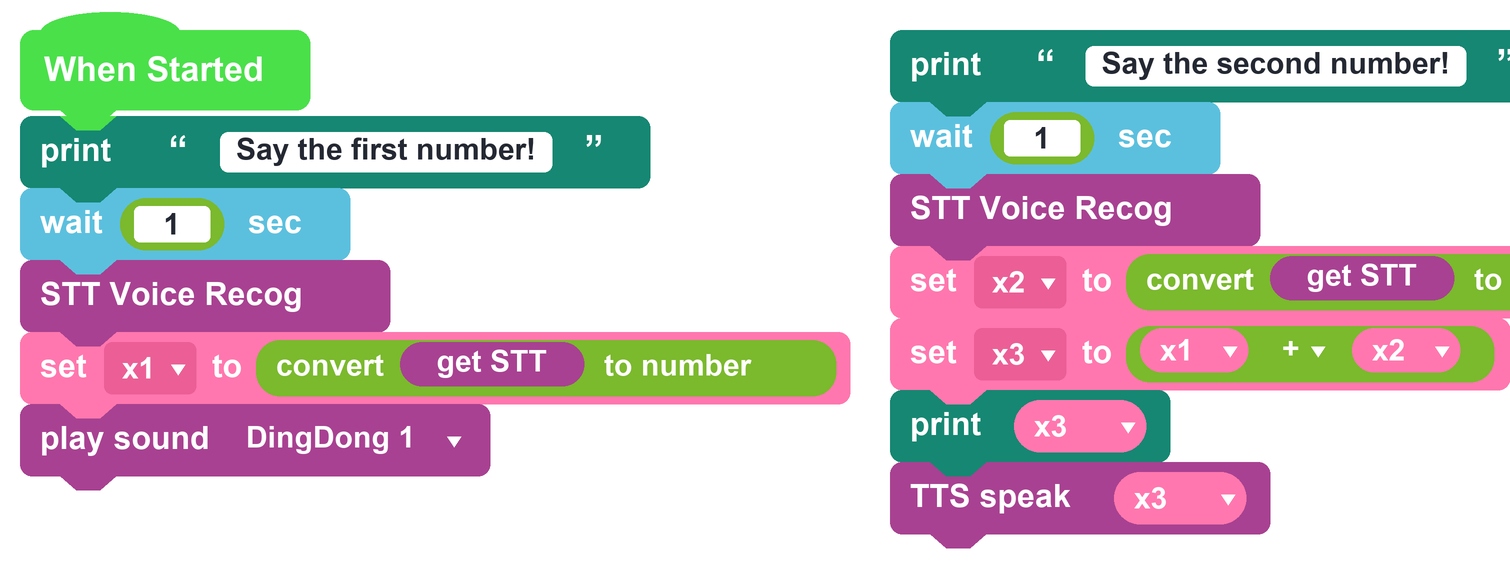
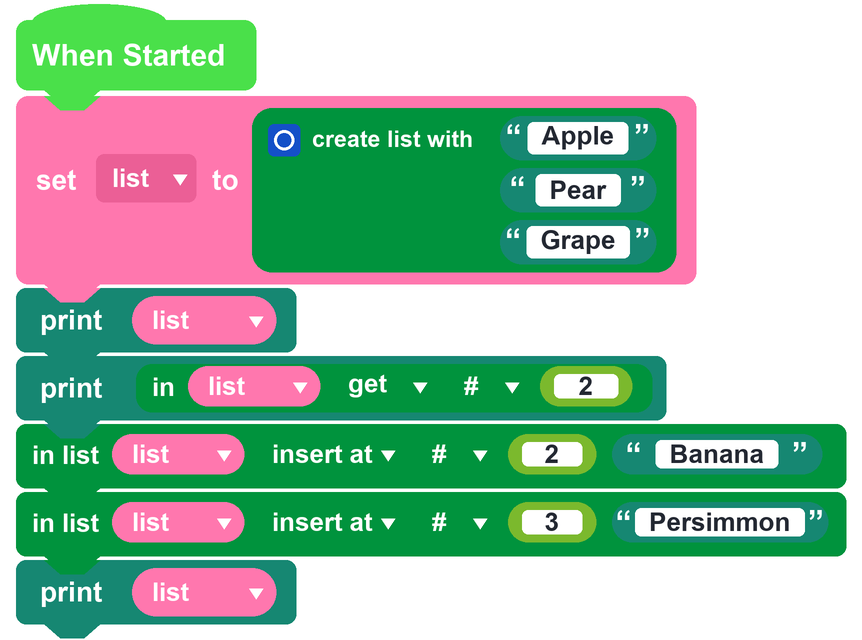
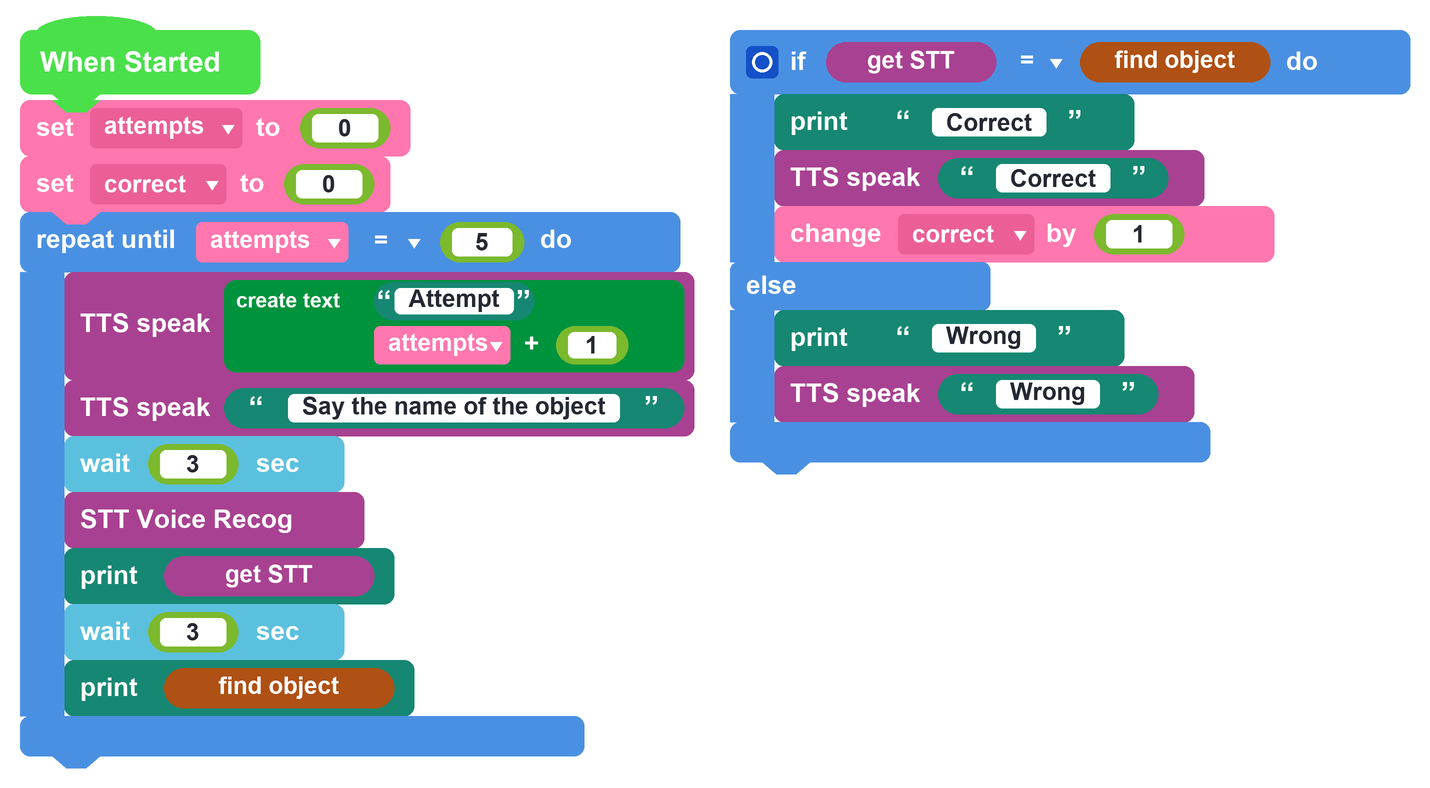
Follow each activity with both the finished result and the real block sequence
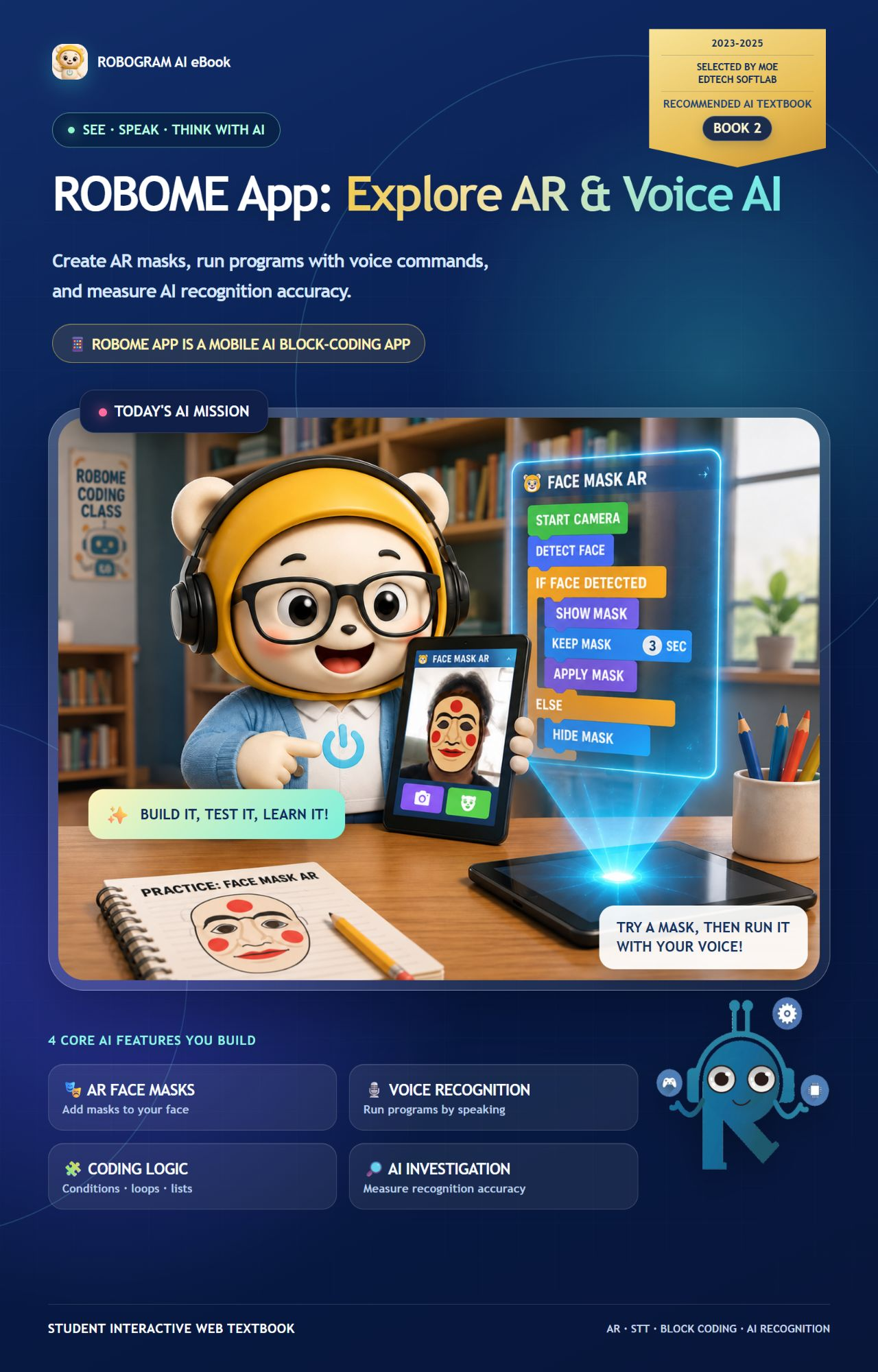
01Apply an AR Face Mask
02Process Spoken Numbers
03Extract and Insert List Data
04Measure Object Accuracy
Preview images show selected activities. The complete book follows a guided learning sequence.
STEP BY STEP
Learning Roadmap
Begin with playful AR masks, build voice-controlled programs, practice conditions, loops, and lists, then measure AI recognition accuracy.
01
First Success
Put a mask on a face
02
Voice and AI
STT basics and voice-mask projects
03
Coding Logic
Conditions, loops, and lists
04
AI Laboratory
Object, number, and letter accuracy
CURRICULUM
Contents at a Glance
Stage 1Put a Mask on a Face
Stage 2STT Basics · Voice Mask · Voice Mask Show
Stage 3Three Conditions · Spoken Score and Grade · Sum 1–10
Stage 3Voice Exit · Large-Number Addition · List Data
Stage 4Measure Object Recognition Accuracy
Stage 4Measure Number Recognition Accuracy
Stage 4Measure English Letter Recognition Accuracy
BOOK INFORMATION
Book Information
Format
Interactive mobile AI block-coding web textbook
Structure
4 stages · 13 projects
Core Areas
AR · STT/TTS · coding logic · AI experiments
Recommended For
Elementary and middle-school learners with basic block-coding experience